Mario Easter Eggs
Zelda and Mario has always been a long sibling story. Zelda 1 and Super Mario Bros. were developed simultaneously and directed by the same people, then a few years later, they did it again with A Link to the Past and Super Mario World, both released on SNES a year apart. It seems they liked this approach, as they once again repeated the process with Super Mario 64 and Ocarina of Time, which this time even shared the same game engine!
It's therefore not so surprising to find various nods to Mario in the Zelda series, and this is the case in ALTTP, the game we're interested in in this section of the site. Below are some easter eggs and other references to the Mario series, as well as some interesting information that follows.
The Mario Portraits
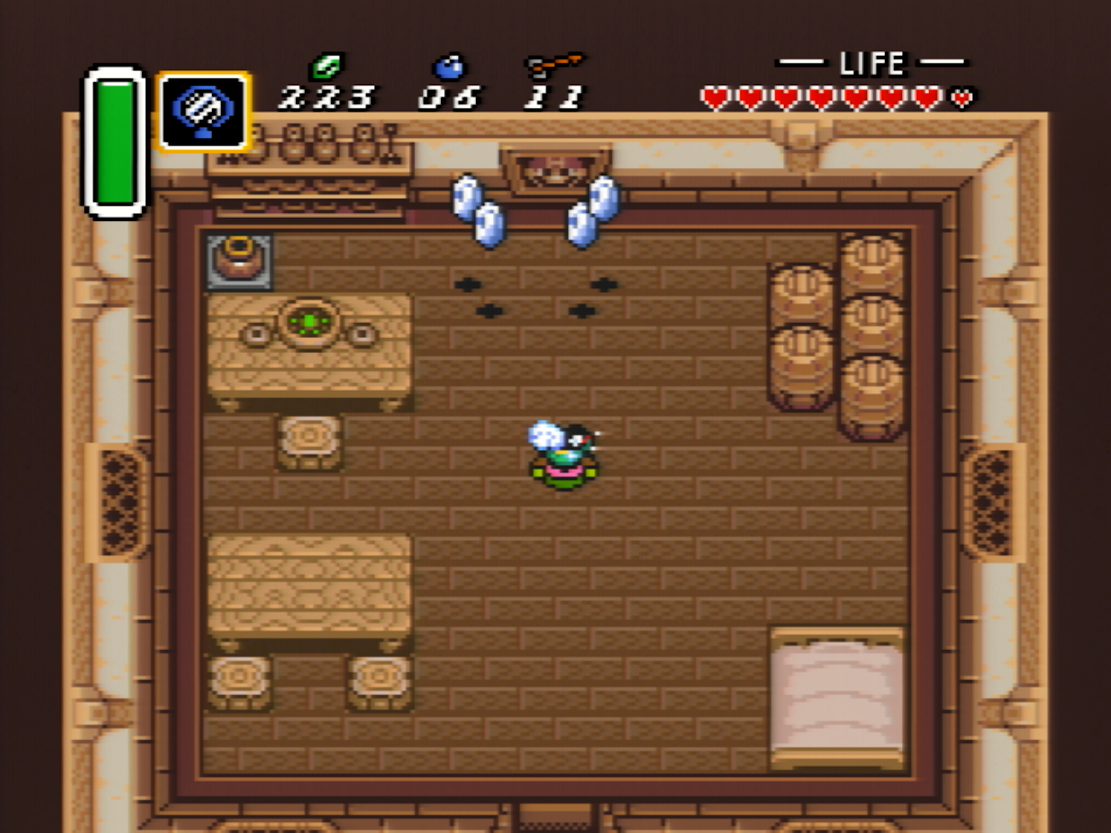
In some houses, you can find a portrait of Mario. If you pull on it, Link rolls backwards in a most acrobatic fashion, and four randomly colored rupees pop out of the portrait. There are actually four possibilities: the rupees can be either green, blue, or red, but there can also be no rupees; it should be noted, however, that these latter two cases are encountered less frequently. We will examine all of this below.
Specifically, the 4 situations mentioned above occur pseudo-randomly, and in this precise case, it's extremely easy to predict whether or not rupees will appear, and if so, what color they will be. But before explaining that, it's interesting to note that the mechanic of these rupees appearing from Mario's portraits is not exclusive to them, and there are actually many objects in the game that possess this property. This extends to trees, statues, pillars, etc. Below, two examples:
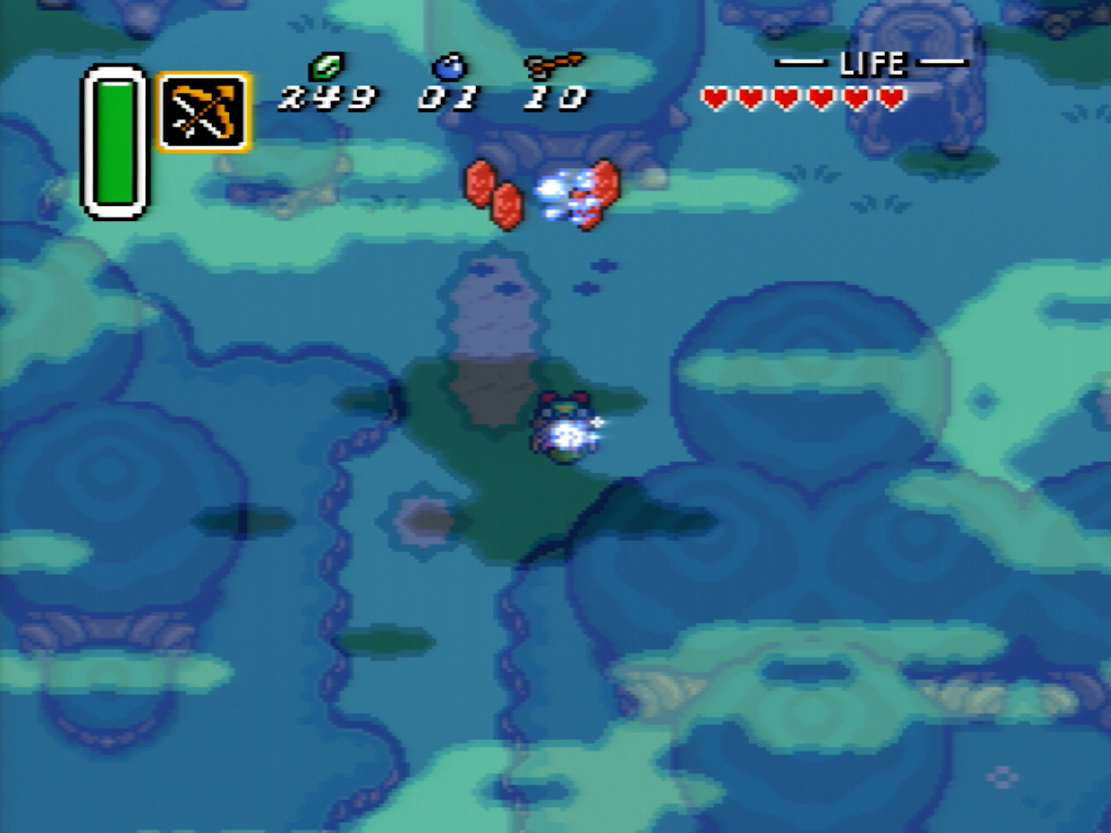
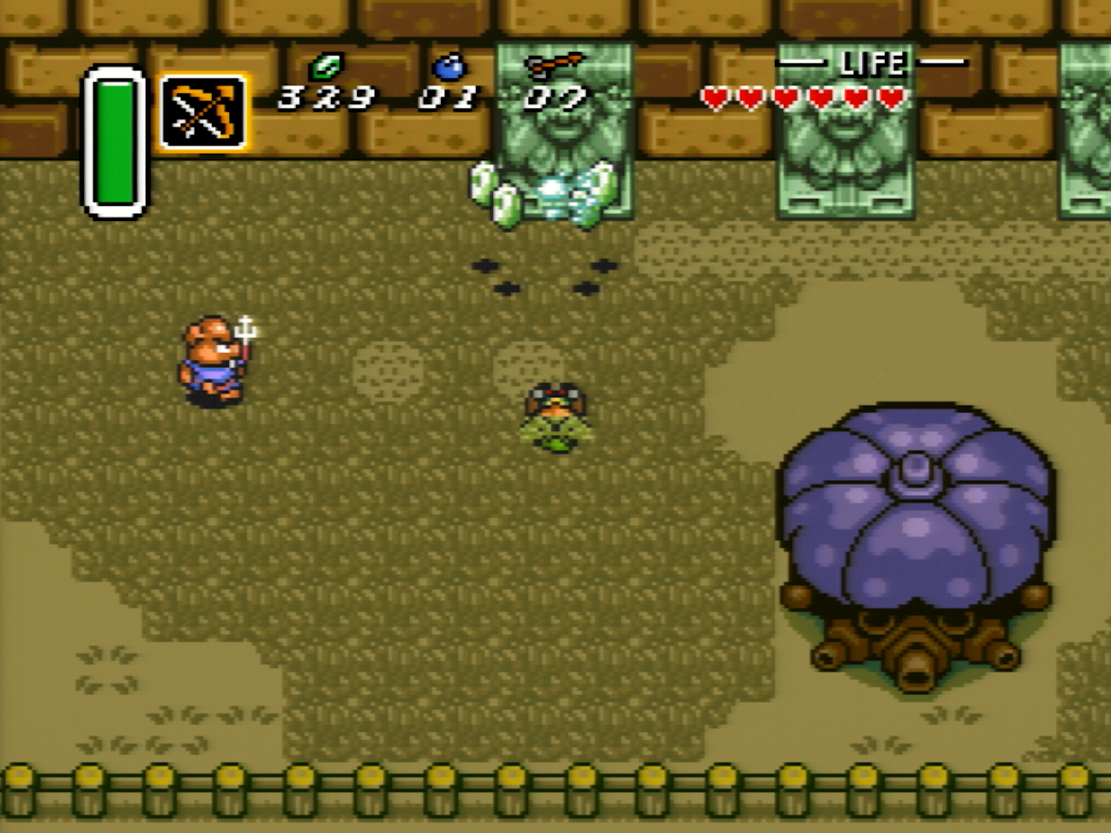
As you could see in the three screenshots above, the rupees are always of a different color. And in fact, it was I who chose to make rupees of that color appear in each case. As I explained earlier, the color of the rupees is determined pseudo-randomly, and there are actually two conditions that determine it:
- The number of enemies you have killed since the last time you pulled an object that has this property
- If you have taken damage since the last time you pulled an object that has the property
Below is a table detailing these conditions and the resulting outcome:
| Number of enemies killed | Did you take damage? | Result |
|---|---|---|
| 0 enemies | Doesn't matter | No rupees |
| Between 1 and 3 enemies (inclusive) | Doesn't matter | Green rupees |
| 4 enemies or more | You took at least one hit | Blue rupees |
| 4 enemies or more | You took no damage | Red rupees |
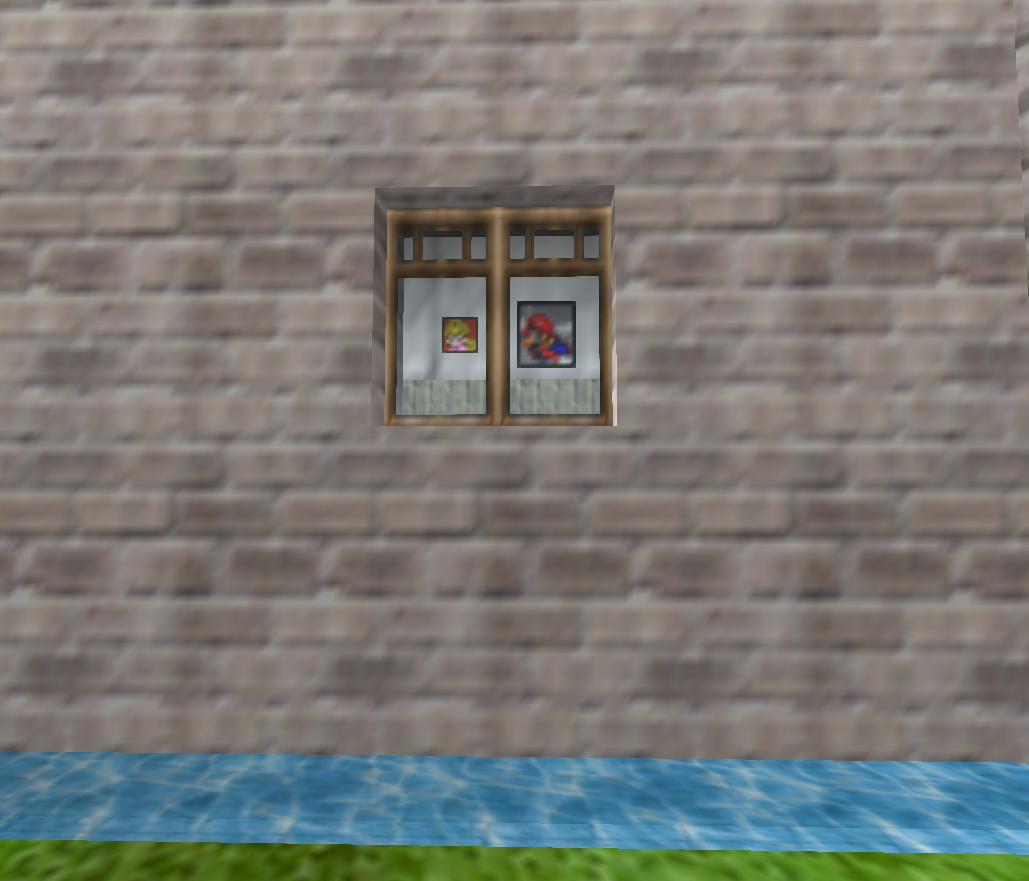
You might have been far from suspecting all this when you started reading this paragraph, haven't you? And that's what's magical about A Link to the Past: the attention to detail and ingenuity in the implementation of the game system that brings surprises where you least expect them... By the way, Zelda fans, does this portrait of Mario remind you of something? 👀
Turtle Rock
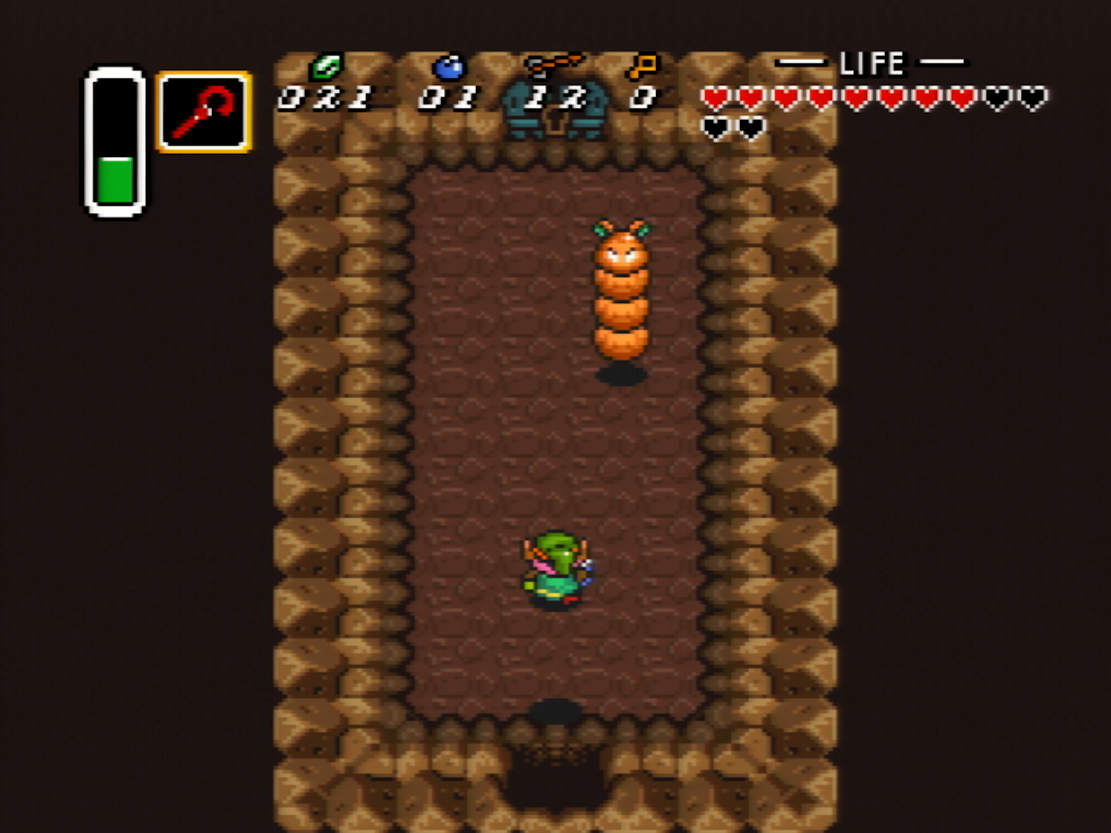
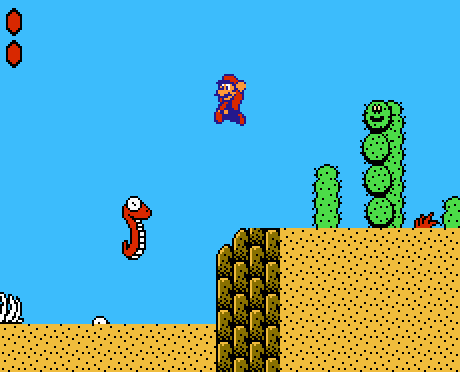
The 7th dungeon in the Dark World houses many references to Mario. One of the first enemies encountered in the dungeon are the Pokeys. At least, that's their English name* in Mario, because in A Link to the Past, they only have an official Japanese name, the Hokkubokku (ホックボック). I haven't found an official or even unofficial explanation for this name, except that it resembles an onomatopoeia (the Japanese language is full of them) and it has a bouncy sound, like the enemy in the game.
* Since it's free, here's the official Japanese name for Pokeys in Mario: the サンボ (Sanbo), a kind of pun with the English word "sand," the Japanese word for cactus (サボテン - saboten), and perhaps even the word "stroll" (散歩 - sanpo).
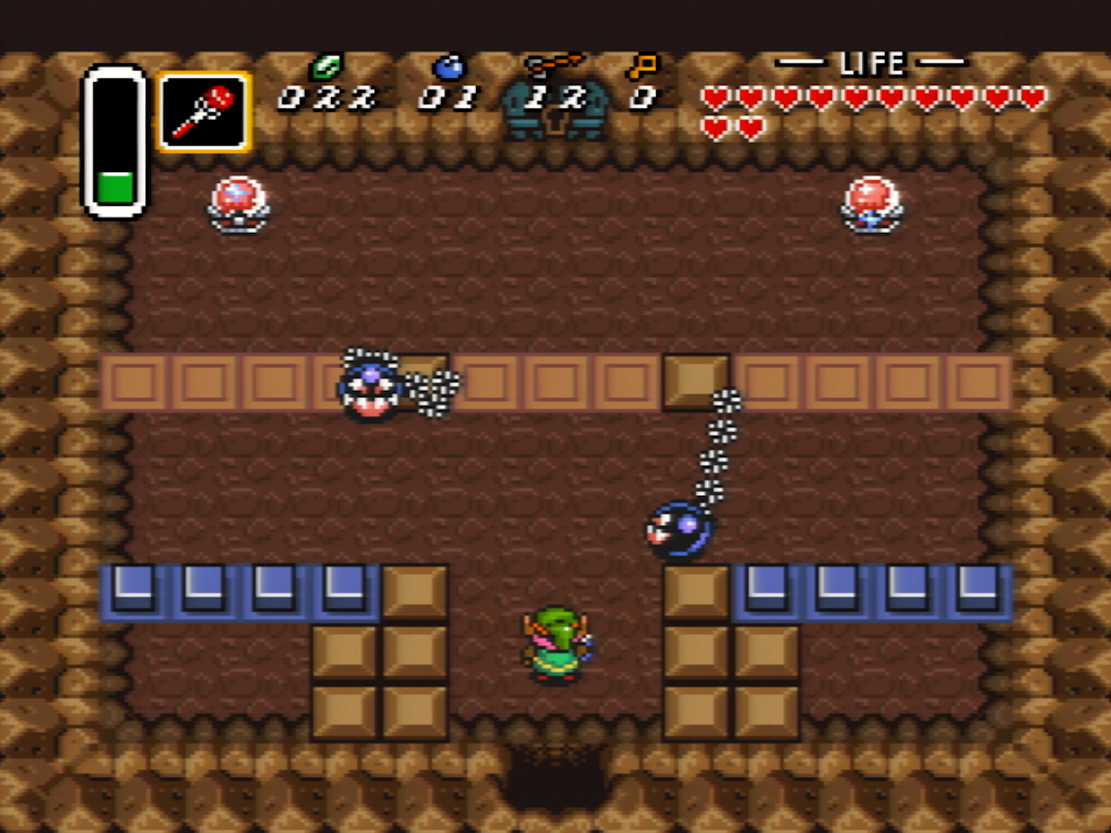
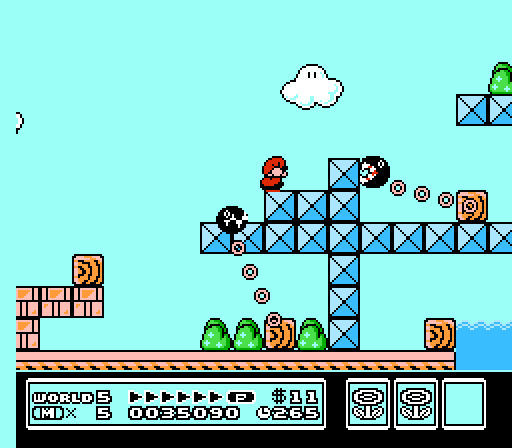
In the room following the previous screen, you'll find Chain Chomps, or Kelvin (ケルビン) in Japanese. Yes, like the temperature unit...! It's true their stare can give you the chills, but I'm not sure that justifies the name 😅. In any case, they are only in this room, and have exactly the same behavior as in their appearance in Super Mario Bros. 3, released 3 years earlier in Japan, namely wandering around a bit, then at regular intervals, rushing towards you until their chain is taut.
Still in the following room, we have another reference to Mario, a bit more discreet this time, and which has no name: the pipes. Turtle Rock is the only dungeon in the game that will make you enter and exit the mouth of greenish pipes. Just like for a certain plumber!
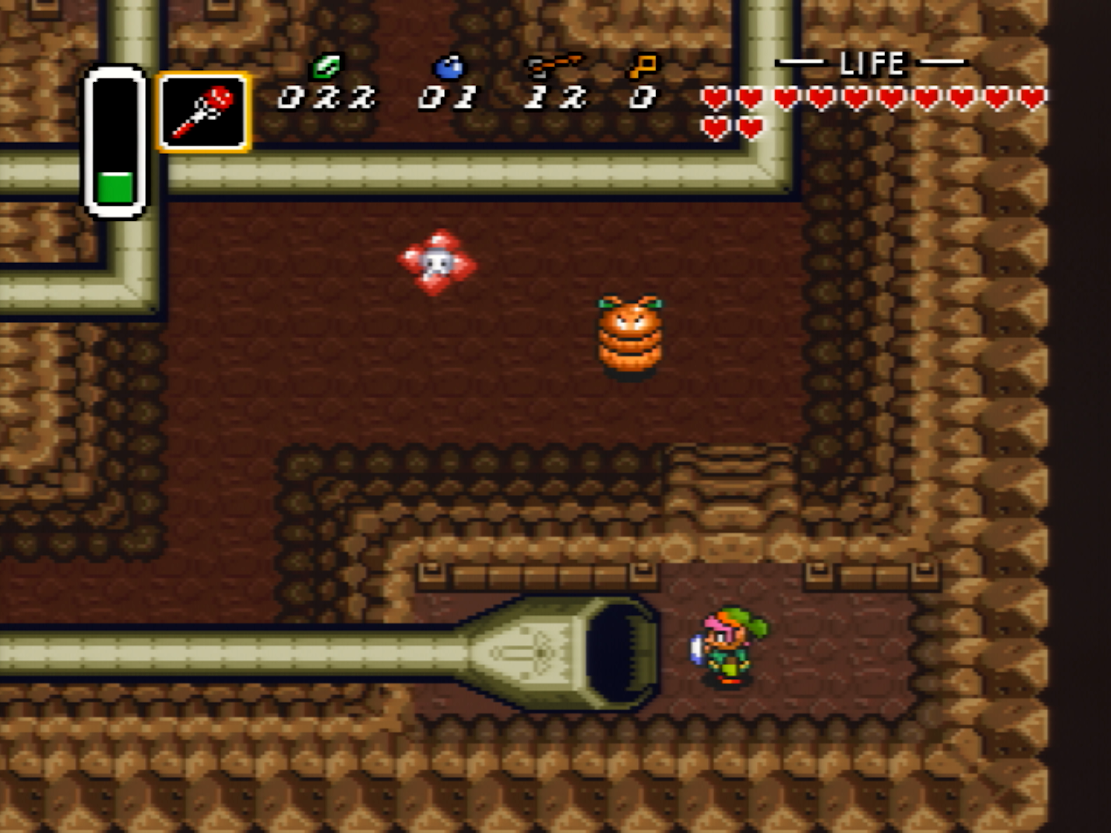
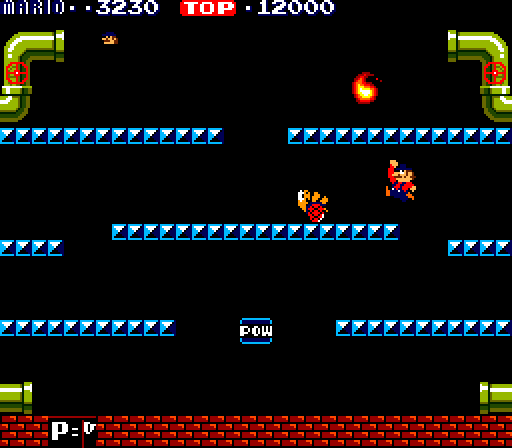
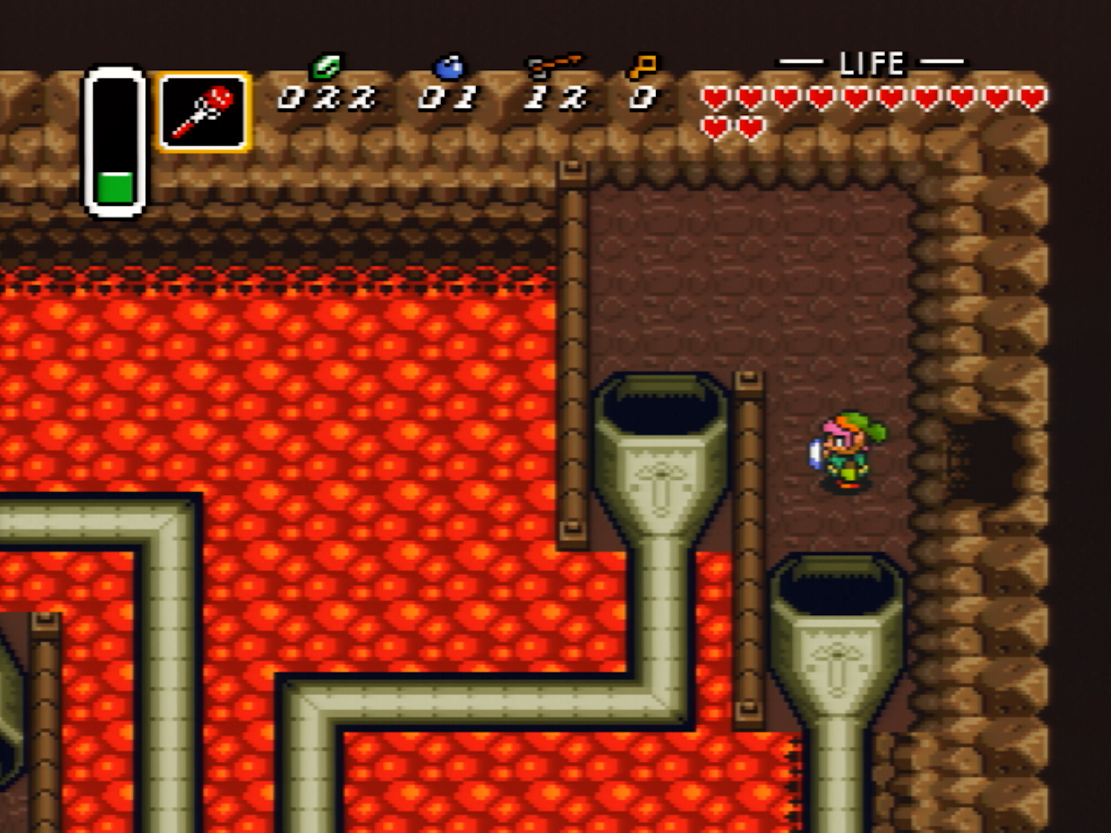
And there's more: one of the large central rooms of the dungeon, where you notably get the Big Key, shows us a magma carpet beneath the platforms we're on. This is reminiscent of the castle levels present from the very first Super Mario Bros., where the gaps between platforms were also filled with lava.
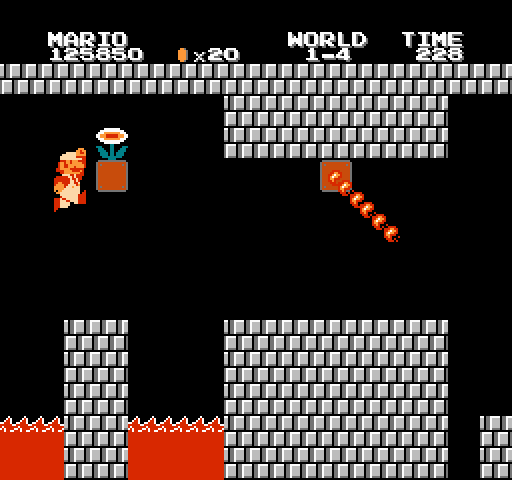
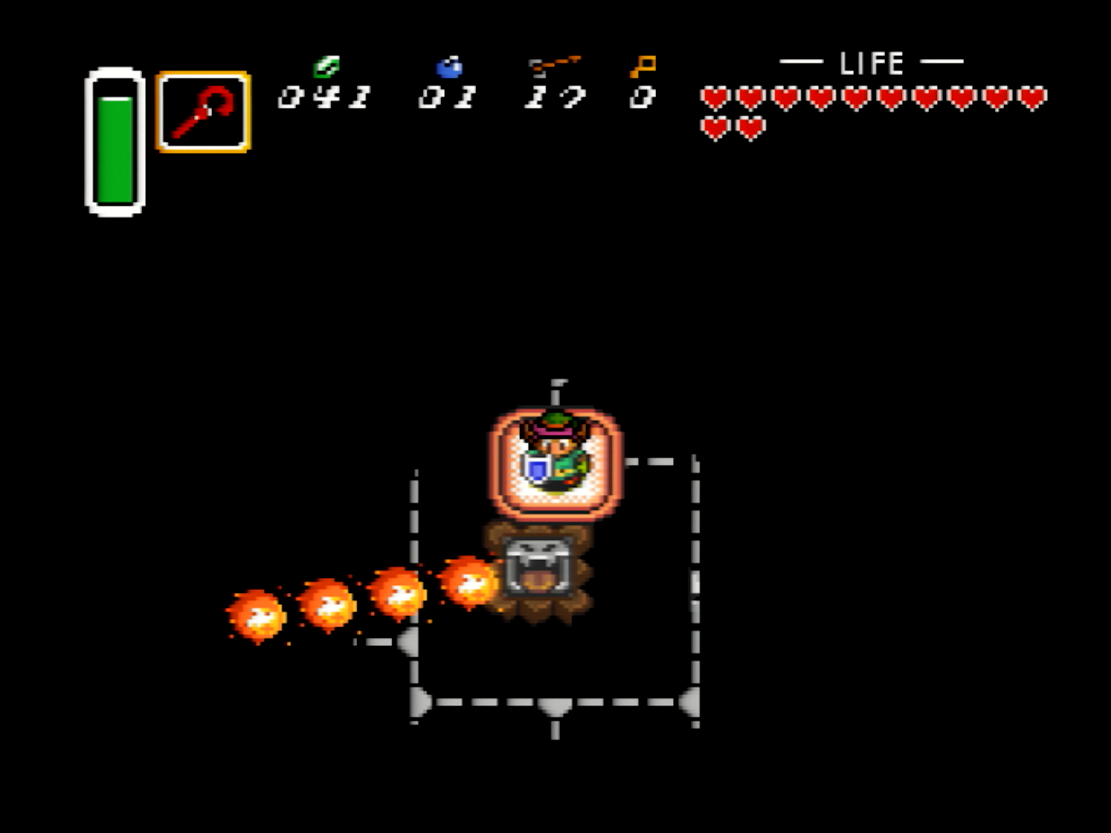
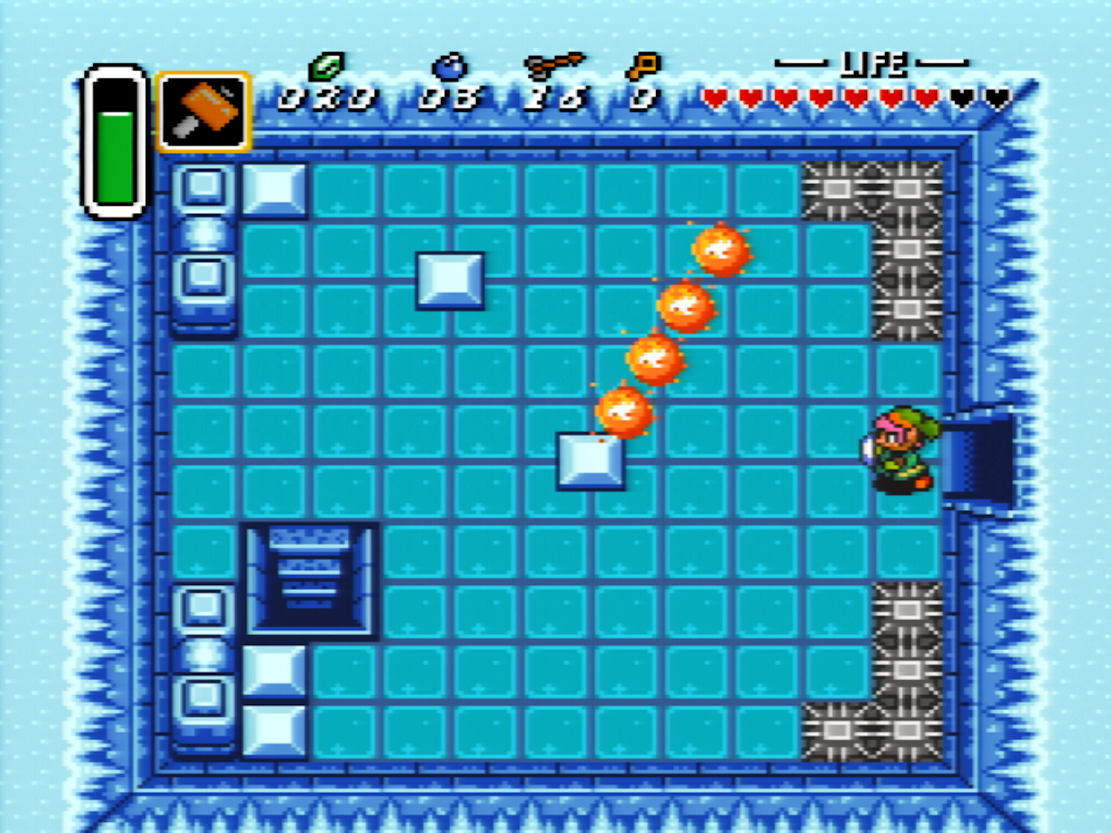
A little further into the dungeon, you face a recurring enemy from the lava levels of the Mario series: the rotating fire bars. For that matter, these are also present in several other dungeons in the Dark World and are not exclusive to Turtle Rock. It is still another easter egg for the Mario series.
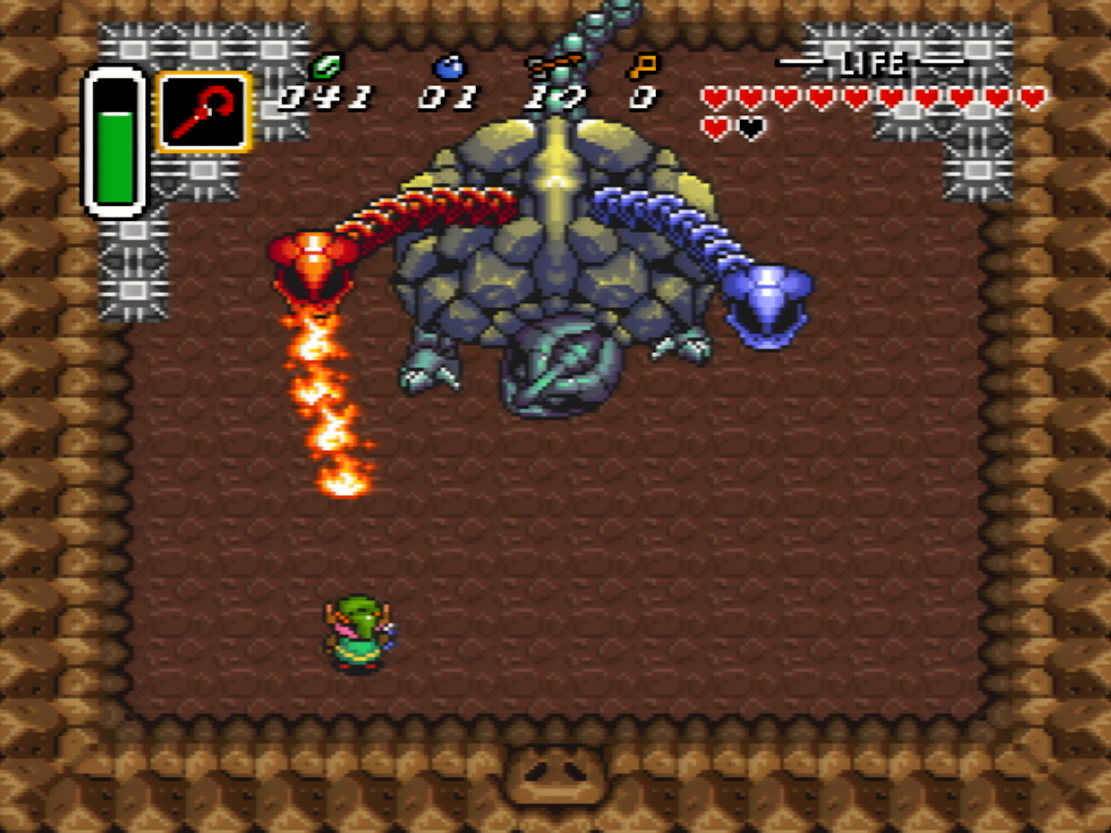
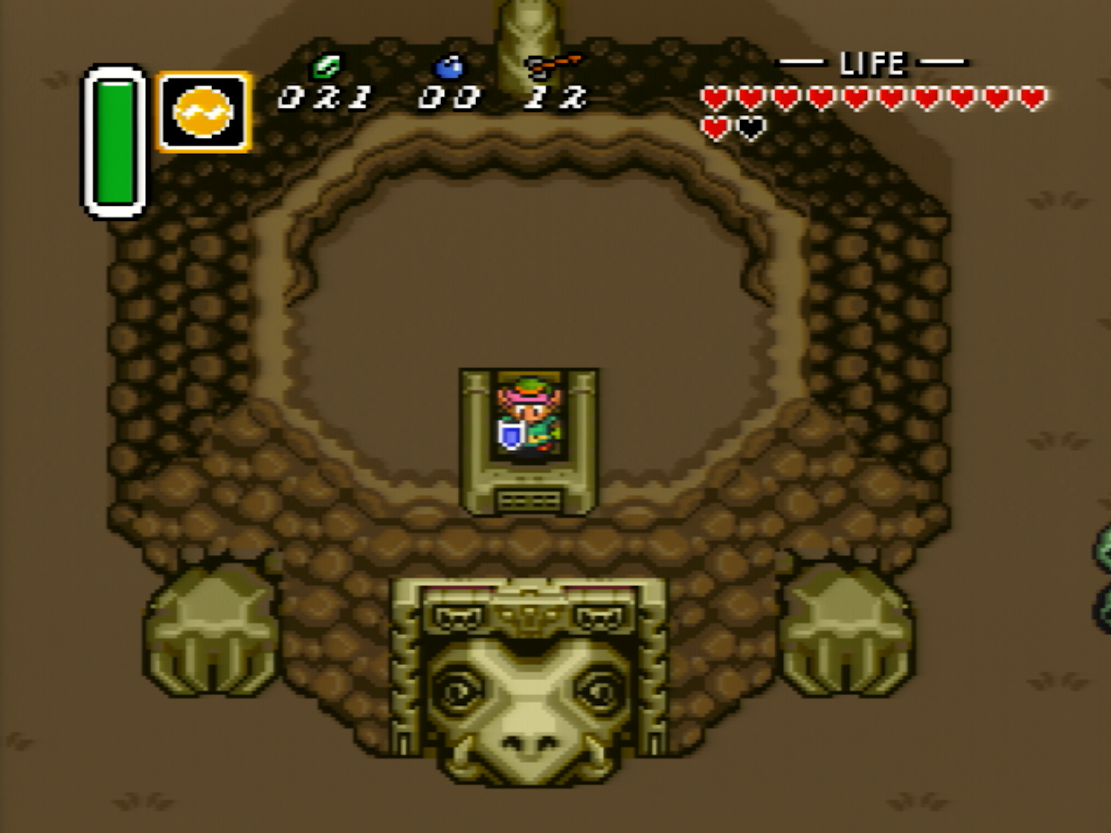
Last but not least, the boss is a giant turtle. That must surely remind you, I don't know, a boss from another game? A turtle too! And what's more, it breathes fire. By the way, I don't know if you had noticed, but all this time we've been talking about elements from Turtle... Rock 😉.
The Fairy Fountain
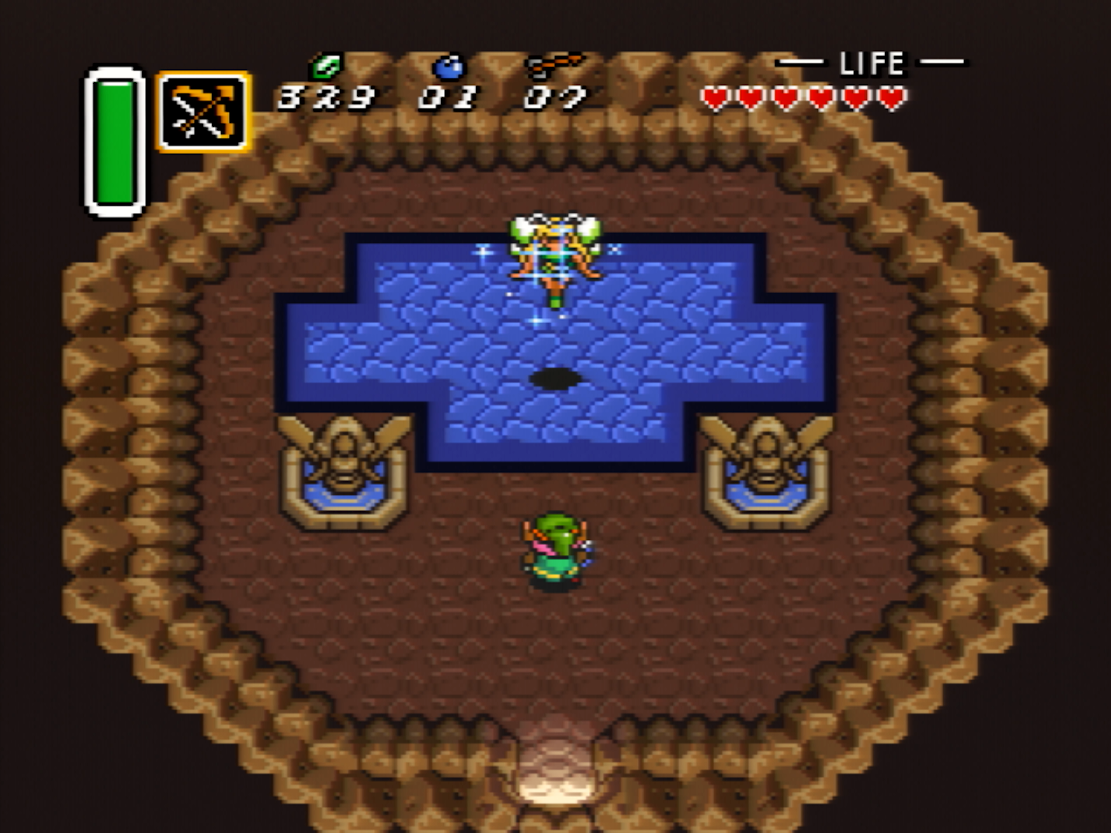
The Fairy Fountain theme is, as described on the page dedicated to the game's music, one of the most iconic themes in the Zelda series. Played in almost every installment of the series, having its own piece during symphonic concerts, it appeared in A Link to the Past.
...are we sure about that?
Super Mario Bros. 3 (him again) is the pioneering game concerning world maps in platform games. Each of the game's 8 worlds has its own unique world map where the player can access different levels in a non-linear way, but also, and above all, its own unique musical theme. If you look at world 3 of the game, Water Land, you can hear a theme that sounds vaguely familiar... Below is a comparison of the two themes. You'll see, it's striking.