Gameplay
ALTTP's gameplay is very simple, and that's partly its strength. It is largely inspired by that of the very first Zelda and transcends it thanks to the power offered by the Super Nintendo. Thus, it lays new foundations upon which the Zelda series, and more generally, video games, would build. The Legend of Zelda: Ocarina of Time is often considered one of the greatest games of all time, notably thanks to its gameplay ahead of its time, but upon closer inspection, you can see all the gameplay that A Link to the Past introduced, adapted into 3D. In fact, there are so many things that OOT borrowed from ALTTP that we will delve into it further in this page.
Controls
Here's what a Super Famicom (or Super Nintendo) controller looks like:
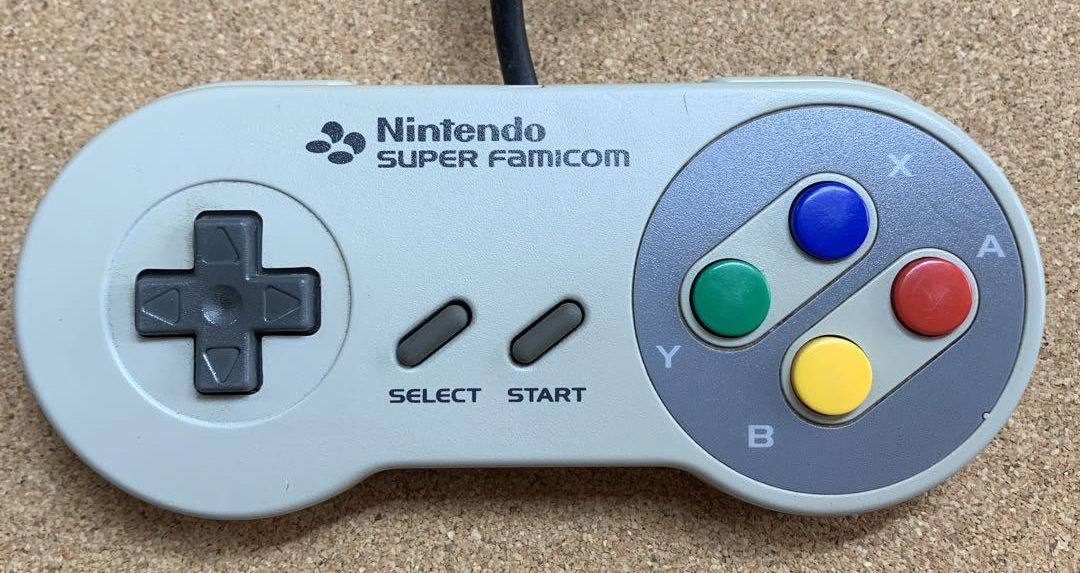
- B Button
- Use the sword and confirm selections in menus. When holding the button, you can charge the sword, and when released, perform a spin attack.
- A Button
- This is the action button: it allows you to lift objects to throw them, to talk to NPCs, to read signs, to interact with levers, to run once you have obtained the Pegasus Boots, etc.
- Y Button
- Use secondary items, such as the Boomerang, Bow, Fire / Ice Rods, Medallions, Mirror, etc.
- X Button
- Used to display the world map in Mode 7 if you are outdoors, and to display the dungeon map if you are in a dungeon.
- L and R Buttons
- The shoulder buttons have only two uses: you can switch the view on the world map, and you can skip dialogues only when they are the last in their text box (yes, really).
- Directional Pad
- Obviously used to move around, and to move the cursor in menus (see what I have to do in order to be thorough... 😅)
- Start Button
- Allows you to pause the game and open the inventory menu: you can select the item you wish to equip. No need to press a button to equip it, just place the cursor over it and close the menu.
- Select Button
- Also pauses the game, but with a different menu: allows you to save the game and quit. Unfortunately, there is no "Save and Continue" option.
Basic Principles
The Legend of Zelda: A Link to the Past is considered an A-RPG (short for "Action Role Playing Game"). You control the character of Link in real-time in a 2D open world from a top-down perspective. The game offers total freedom of movement to the player, who can alternate at will between exploration phases of the world of Hyrule, and dungeon phases, in which you must solve puzzles, defeat monsters, find the hidden item, and reach the Boss awaiting at the end.
About a third of the way through the game, the player gains access to a second world, which literally doubles the available playing area, and offers an equally open environment, with more dungeons and secrets to discover. The player can return to the first world at any time by using an item, and must find teleporters in order to return to the second world.
Thanks to the various items found not only in dungeons but also during our exploration of the overworld, more and more paths, secrets, and items become accessible to us. This is a structure that can be quite clearly identified as Metroidvania, even though Super Metroid would be released 3 years later, and Castlevania Symphony of the Night 6 years later.
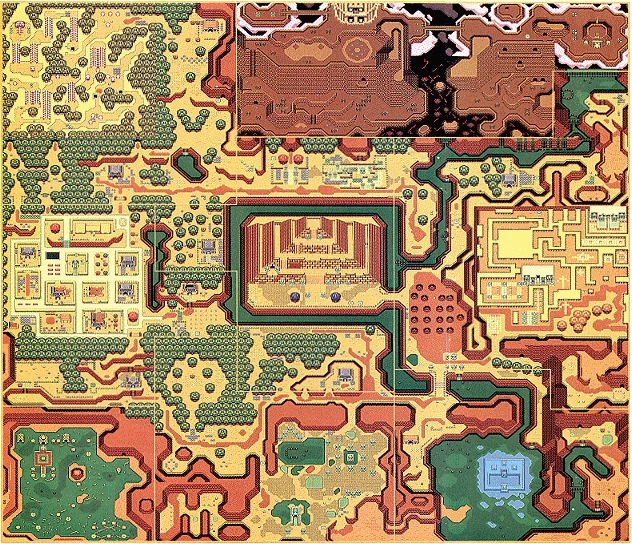
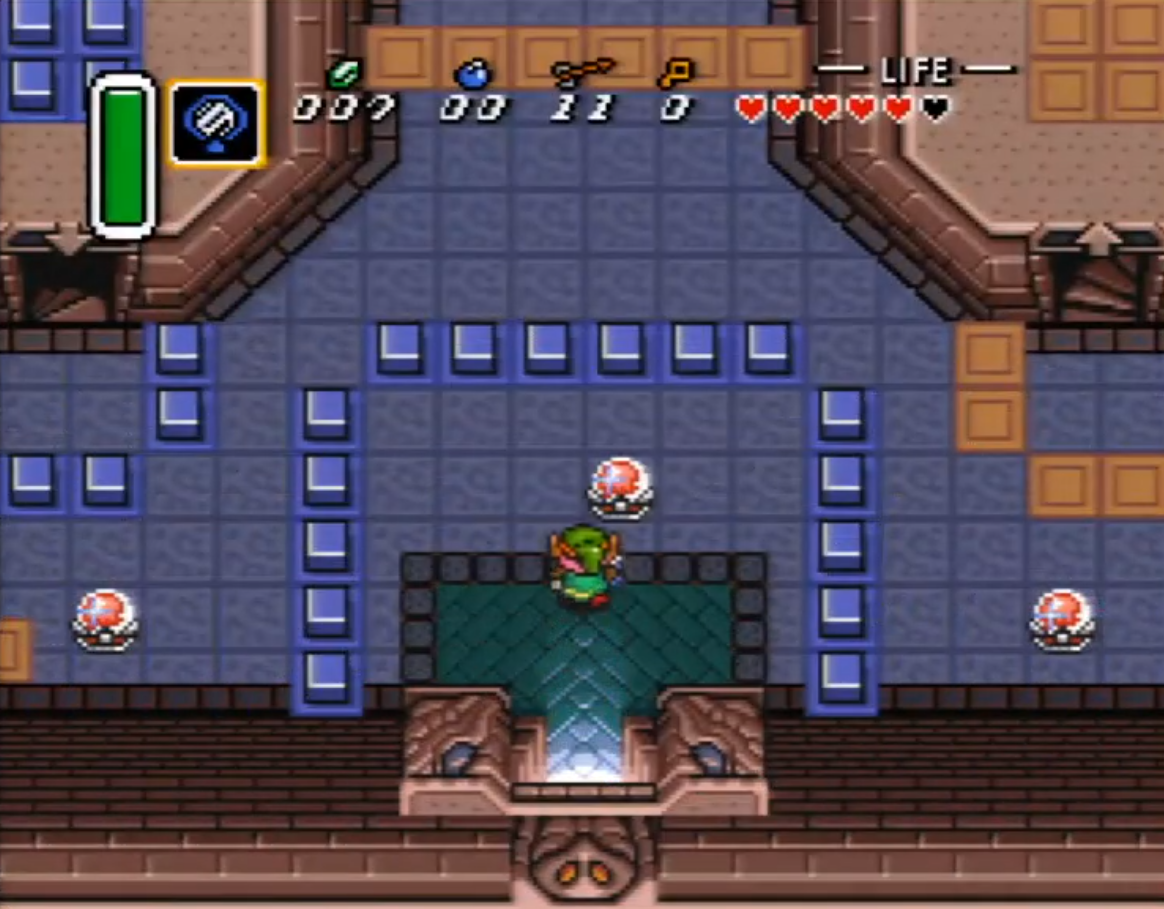
The player has a life bar symbolized by hearts. They start the game with three hearts, a life bar that can be increased by collecting Heart Containers or Heart Pieces (4 Heart Pieces = 1 Heart Container). An element borrowed from Zelda 2, in addition to health, there is a magic bar, which can also be improved throughout the game.
A Game Design Revolution
One completely successful element in A Link to the Past is the interaction allowed by the various items in the game with the environment and enemies. Thus, it is possible to propel oneself onto any chest or sign with the Hookshot, the Bug-Catching Net allows collecting bees and fairies, bottles allow storing many items, the Ice Rod allows freezing most enemies, etc. etc. There are many situations that can be approached in different ways, and this is what makes the strength not only of this game, but also of the entire Zelda series in general.
Until A Link to the Past, adventure games often boiled down to exploration and combat. Thanks to its rich gameplay based on a very comprehensive inventory, the player's analytical skills are also put to use: environmental puzzles require understanding the sometimes complex layout of dungeon rooms in order to activate the right switches at the right time to make a path to the item and/or to the dungeon boss. Once facing a boss, or a tough enemy, the player must often demonstrate observation skills to detect the boss's weak point, and how to exploit it.
Here you'll probably tell me: "well, it's simple, we're in Zelda, so just use the dungeon item to defeat the boss!". And while that might be obvious now, it certainly wasn't in 1991, as before ALTTP, no Zelda had implemented these kinds of mechanics! What's more, this assertion isn't always true in A Link to the Past, as some dungeons don't provide attack items.
For example, once facing the Ice Palace boss, you have to remember that you found the Fire Rod in Skull Woods, as it is its weak point. The Ether Medallion can also help, if you found it beforehand in the overworld. Similarly, the Ice Rod works against the Desert Palace boss, but you have to have taken the trouble to explore to find it. It is also indispensable to defeat the Turtle Rock boss!
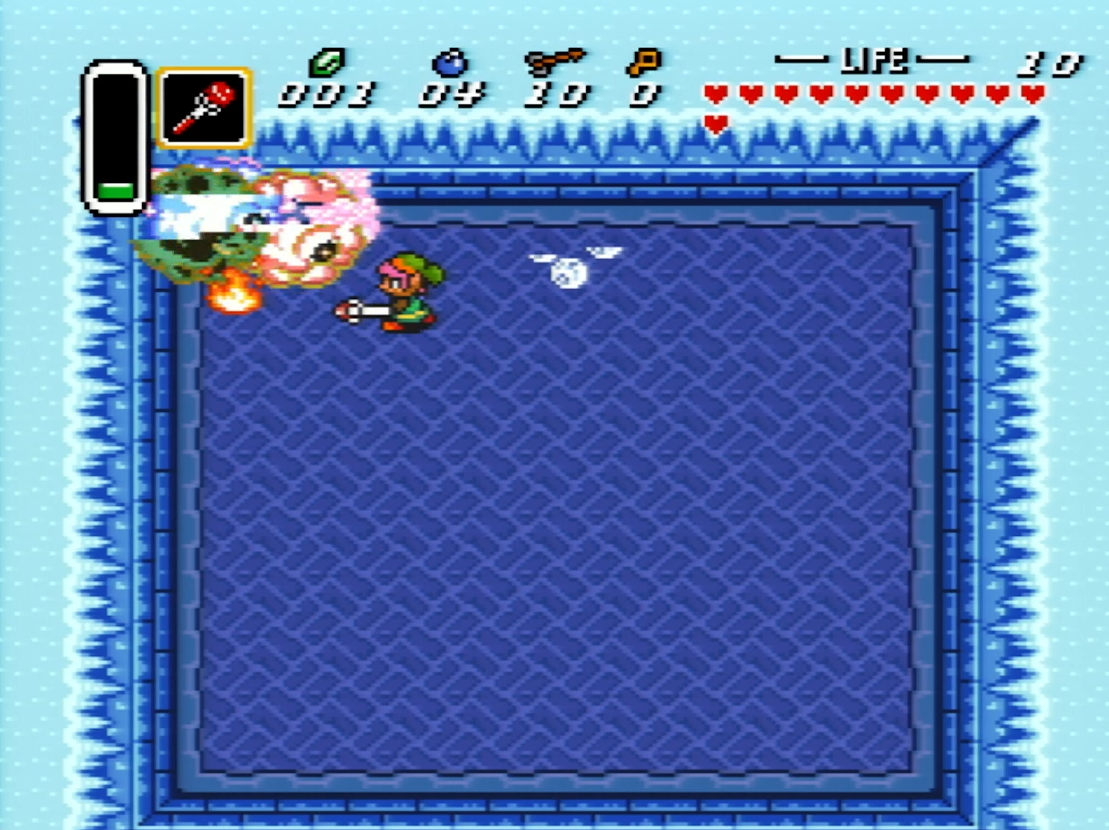
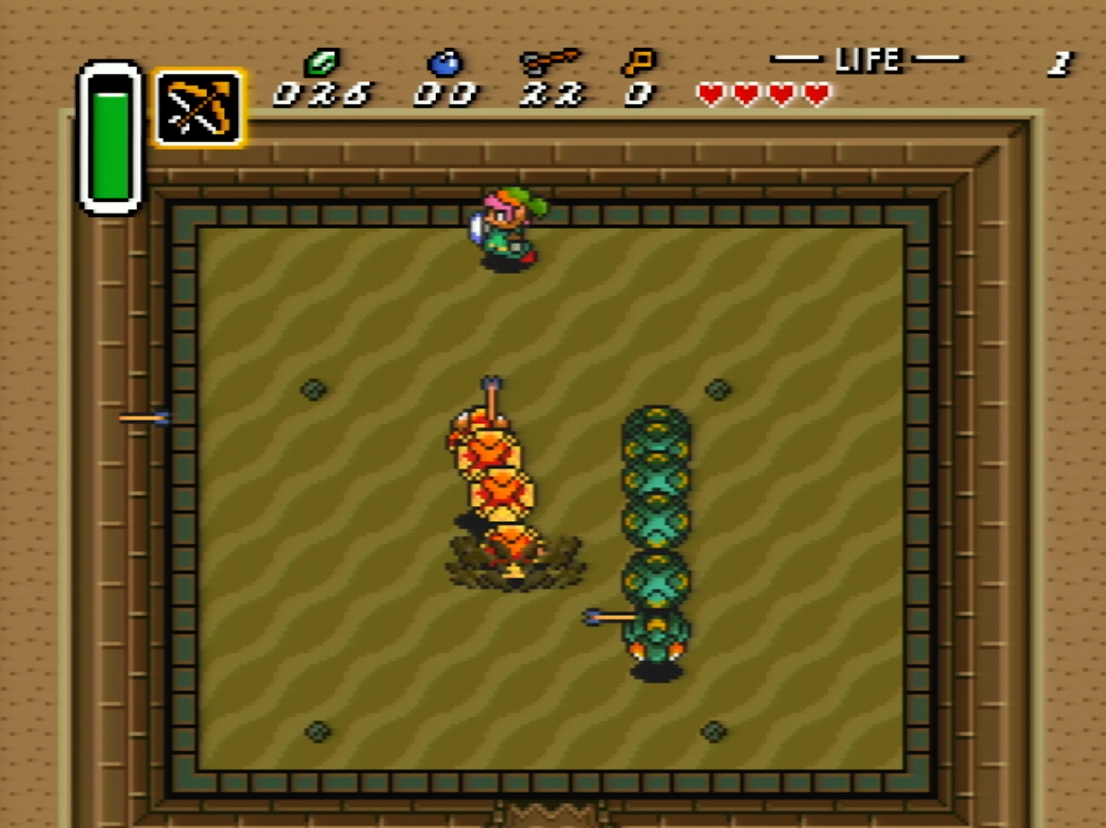
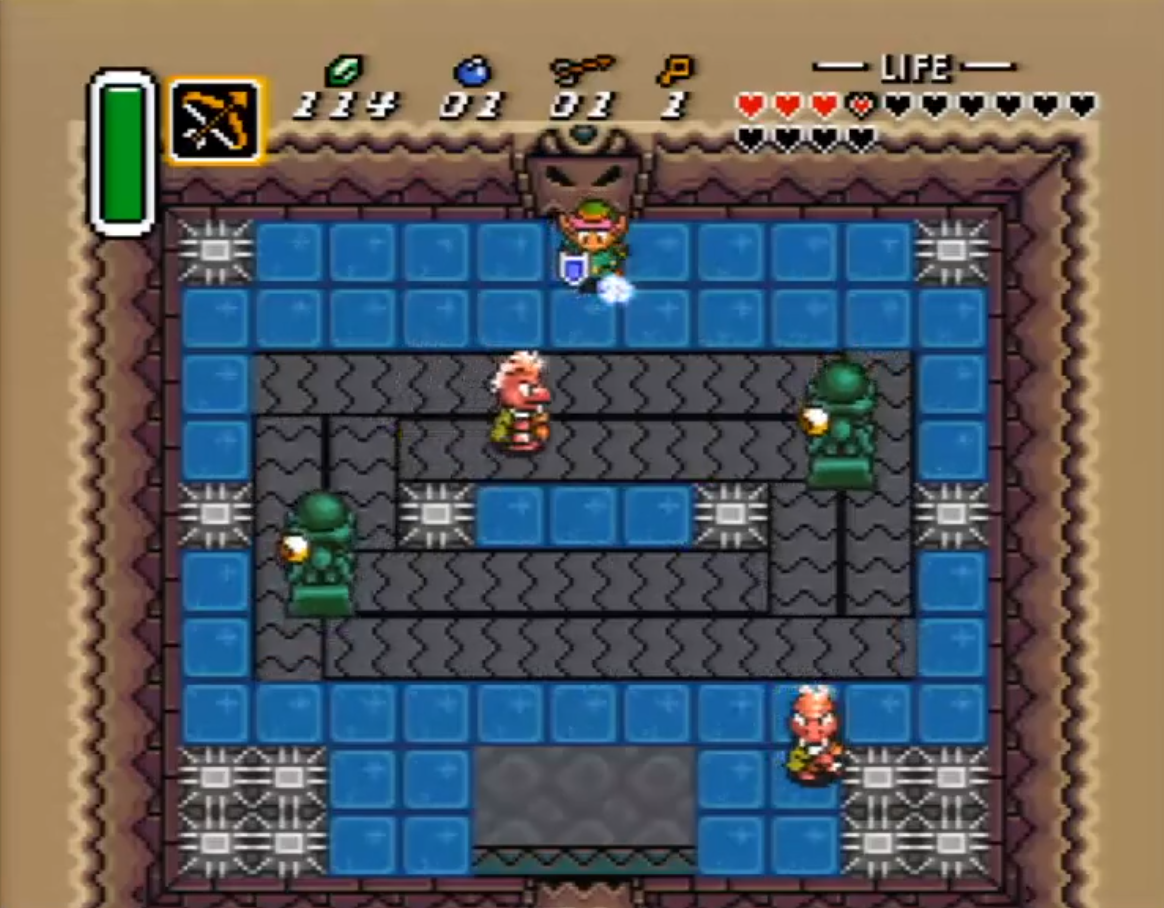
In terms of combat, the game certainly requires an analysis of the situation so that the player can use the appropriate weapon(s), but it also offers a significant challenge, and is often considered one of the most difficult Zelda games. This balance of "combat difficulty / figuring out how to defeat the enemy" will increasingly lean towards "figuring out how to defeat the enemy" and less and less towards difficulty as the series progresses, but for now, we find ourselves with Ganon's Tower offering rooms ranging from "conveyor belt with enemies" to "conveyor belt with two sentries placed on it accompanied by enemies that can shoot from a distance, all on ice and with some spikes thrown in". A real treat 😅
The game also heavily rewards exploration thanks to its innovative concordance system between the two worlds. The player must not only analyze the terrain in one world, but also remember the terrain in the other world in order to teleport to the right places, which will often allow them access to a multitude of items, Heart Pieces, or even rupees.
The sense of progression is also very well-crafted, because while at the beginning you start with 3 hearts and without even a sword or shield, by the end of the game you can reach 20 hearts, a sword upgraded 4 times, a colored chainmail that visually very effectively conveys your increased resistance, and an inventory full of items that are all relics of your adventure. This sense of progression is felt throughout the game with each new path discovered or each new challenge overcome thanks to a newly acquired item.
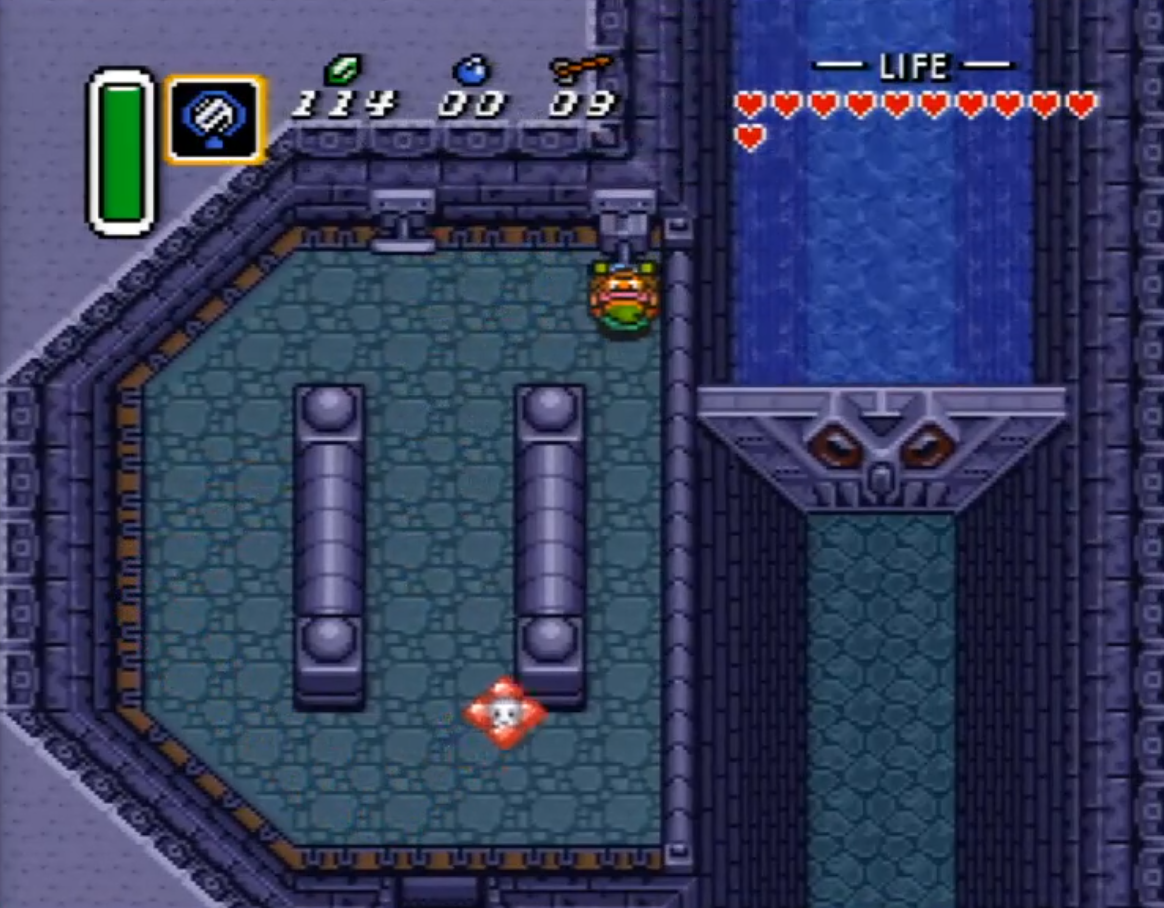
In short, ALTTP offers rich, complete, and satisfying gameplay that rewards exploration, provides a challenge, and it's no coincidence that games considered today among the greatest of all time borrow heavily from it!